
Stepping Into Wholeheartedness
"Half here will kill you after a while.”

“The antidote to exhaustion is not necessarily rest. The antidote to exhaustion is wholeheartedness.”—David Whyte
This quote was part of a longer, fascinating passage that Diana M Smith shared with us at the writing retreat I led two weeks ago. It is from Whyte’s book Crossing the Unknown Sea: Work and the Shaping of Identity. The words above jumped out at me like a beacon, something Whyte’s friend Brother David had told him, and I captured them in my notebook.
This newsletter is free for all. Subscribe so you won’t miss a post. If you value these letters, consider upgrading to support this work and access monthly opportunities to connect.
The first meeting for supporting members is Sunday, December 7
9:00 am PST/10:00 am MST/11:00 am CST/12:00 pm EST/5:00 pm GMT/6:00 pm CET
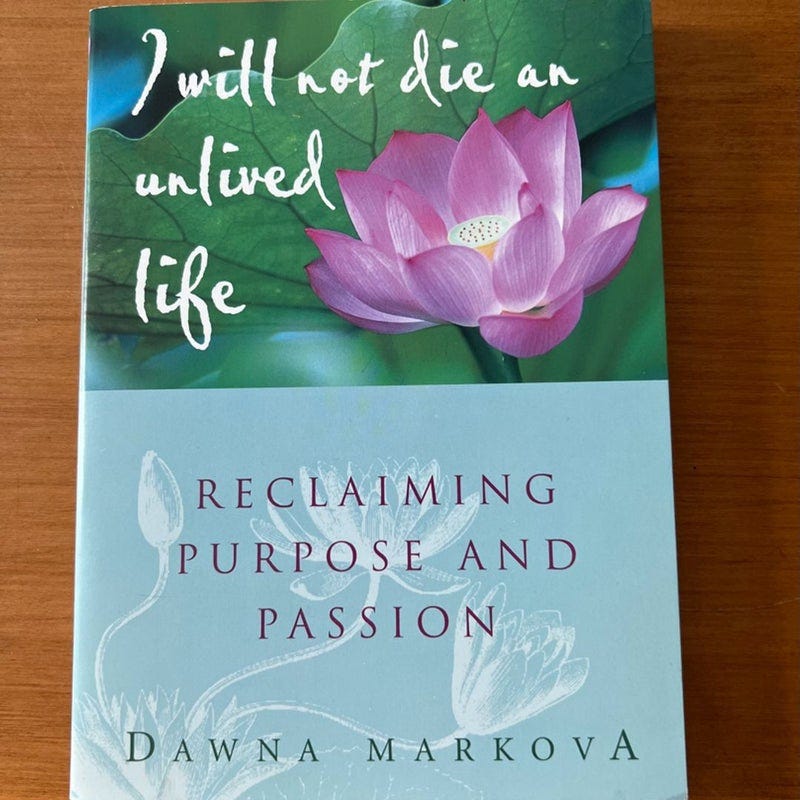
About two hours later, after Diana and I had lunch and she went to lie down for a rest, I reached for a book that I had meant to consult in preparation for the retreat but had forgotten about. Something had reminded me of it, I wasn’t sure what. I opened the book at random (the page was not marked with a post-it, as a few others were), and the first thing I read was this underlined passage, loosely quoted from David Whyte’s book:
“The antidote to exhaustion may not be rest. It may be wholeheartedness. You are so exhausted because all of the things you are doing are just busyness. There’s a central core of wholeheartedness totally missing from what you are doing.”
I howled out loud when I read those words, from this little book:
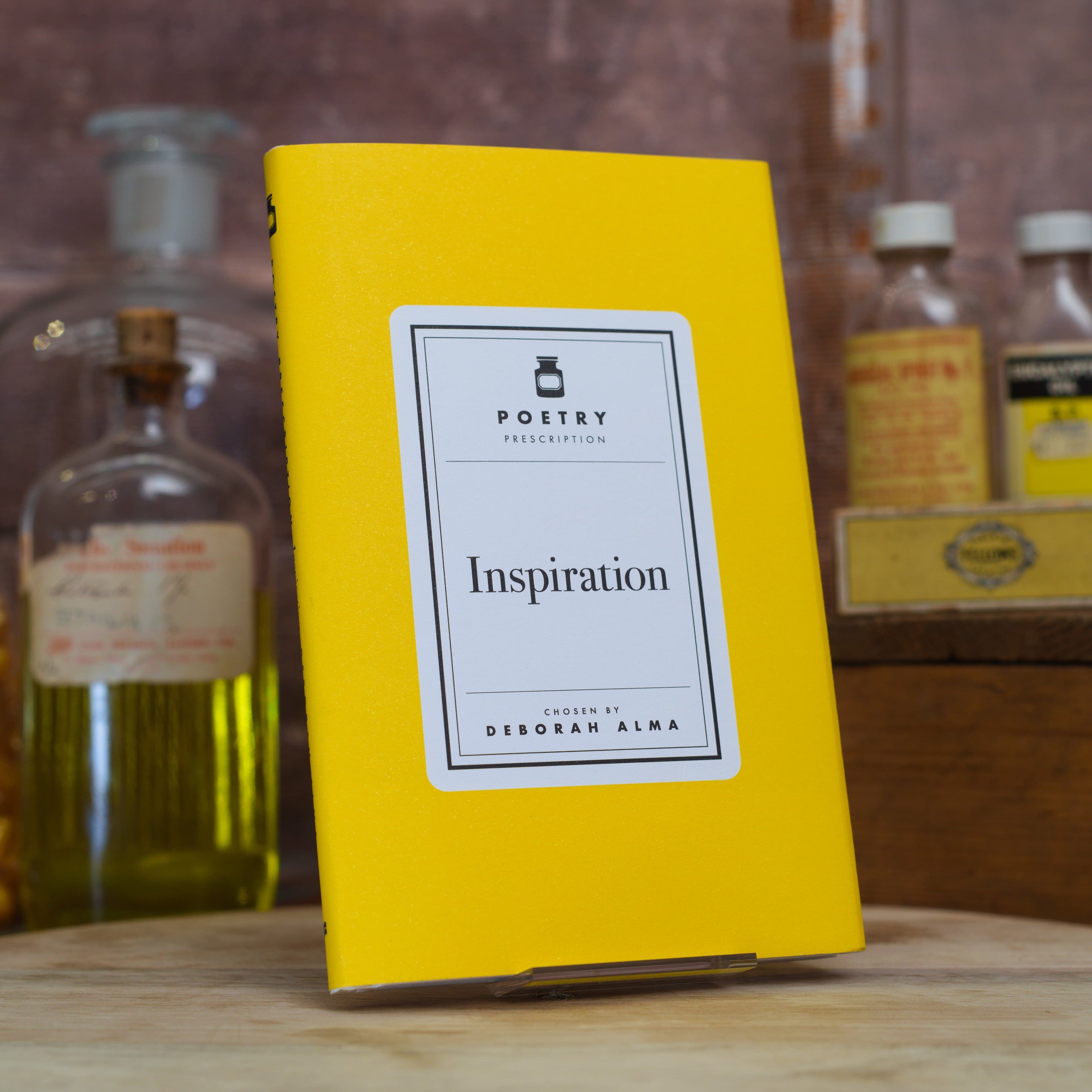
Rarely have I so clearly experienced a synchronicity like that. At the retreat we’d been talking about synchronicities: One woman had just finished reading Katherine May’s Wintering, and just the night before I had begun to read it. When I read the opening poem to the book that I put in each participants room (Inspiration from the Poetry Pharmacy), one woman said that happened to be the one poem in the world that she knew well and loved.
But coming across this quote randomly, twice, in rapid succession like this, I thought, there is something here that I must listen to.
Exhaustion
I know exhaustion well. Whyte describes it feeling like being in “a deep well of fatigue looking up toward a tiny ellipse of light flickering at the surface.” He goes on to say that he felt that the light might go out altogether “and the waters flow over me.”
One of the main reasons that I knew I couldn’t go on living my old life was because I was in that deep well and feeling as if I might drown. After I turned fifty, I felt in my bones that I couldn’t go on living this way, my body simply wouldn’t be able to carry on at this pace. But I can see now that it wasn’t simply because I was trying to do all the things; it was also because, as Brother David told Whyte:
“You are only half here, and half here will kill you after a while.”
God, that must be one of the most profound things I’ve ever read. Half here was definitely killing me!
For many years, I’ve struggled with my energy levels. When the pandemic hit, I was so burnt out that it seemed as if my vital energy sources had been depleted, permanently. I fatigued easily. I still struggle to keep up with others at times (like some amazing women in their 60s, 70s, and 80s I traveled with through Italy last year!). I had to learn to pay attention to my body. Rest became a necessity, no longer a luxury.
So as I prepared for the retreat, I thought, I’m going to get tired. I will need to be careful. I don’t want to overdo it. I know that being around people and talking all day saps my energy. I have extrovert tendencies, but my energy levels say that I’m introvert. I was worried that I might poop out at some point—if not during the retreat then certainly after.
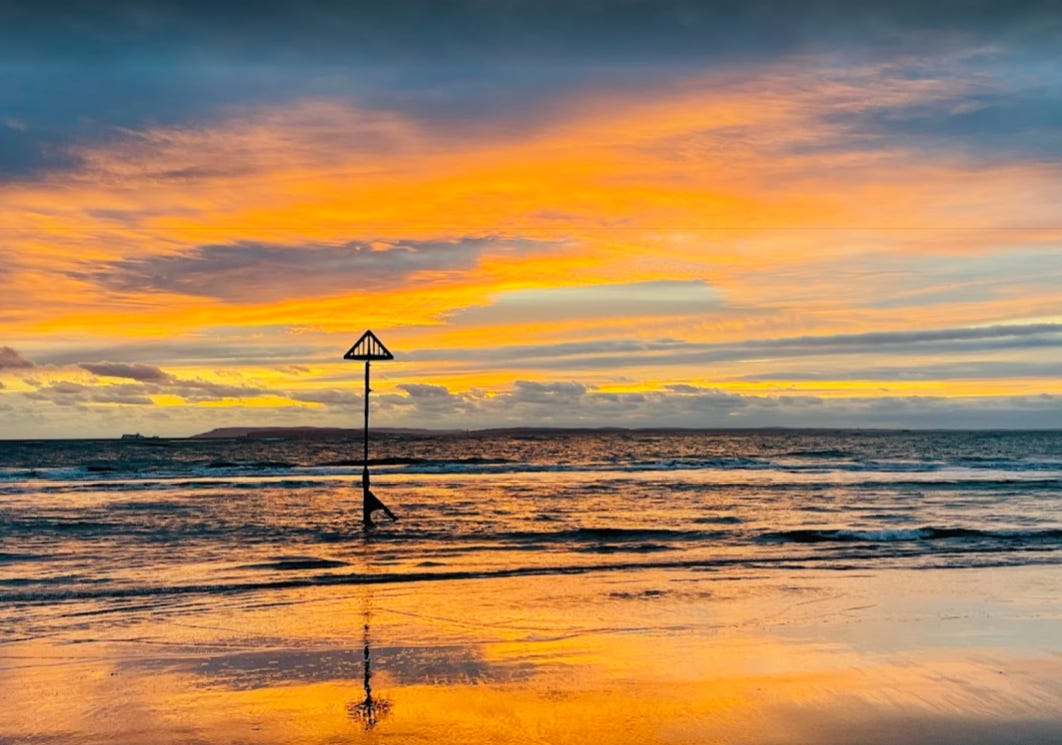
But the strange thing was that it didn’t happen. Not only did I not crash at all during the four days of the retreat, but I had plenty of energy even after they left. Rather than collapse on the couch for the rest of the day (they left at noon), I ended up going for an hour-and-a-half hike around the coast to watch the sun set.
Wholeheartedness
As I’ve looked back on the retreat, I have thought many times about the antidote to exhaustion being wholeheartedness. My heart felt so full the whole time the participants were here. I loved sharing what I’ve learned, hearing their stories, helping them see how they can approach their writing—and their lives—in new ways. It felt so good, like this is the work I’m supposed to be doing.
Looking back on the thirty years I spent in academia, there were parts of it I loved, but my whole heart wasn’t in it. I had to hide parts of myself—chop them off even—to fit in. Anyone who’s gone to grad school or worked in academia knows the true meaning of imposter syndrome. You are made to feel never enough, always graded and ranked, your worth summed up in reductive ways that never feel like a true reflection of yourself. (I have to admit that I felt that way again as a student in a Master’s program.)
As a professor, I felt I was always playing a part. I would put on my work clothes and adjust my mask and head to campus, and all day I would be a persona, never myself. (At first I was Dr. Boyd, then later, after my daughter was born, I wanted to share her name and became Dr. Rioux.) Over the years, the mask dropped little by little, until I felt I had to leave altogether, in order to be my true self.
When I left in 2022, I had no idea who I really was yet. I felt a lot like a duck out of water, waddling along—or like an awkward swan, borrowing from David Whyte’s Crossing the Unknown Sea again. His friend Brother David reads him “The Swan” by Rilke:
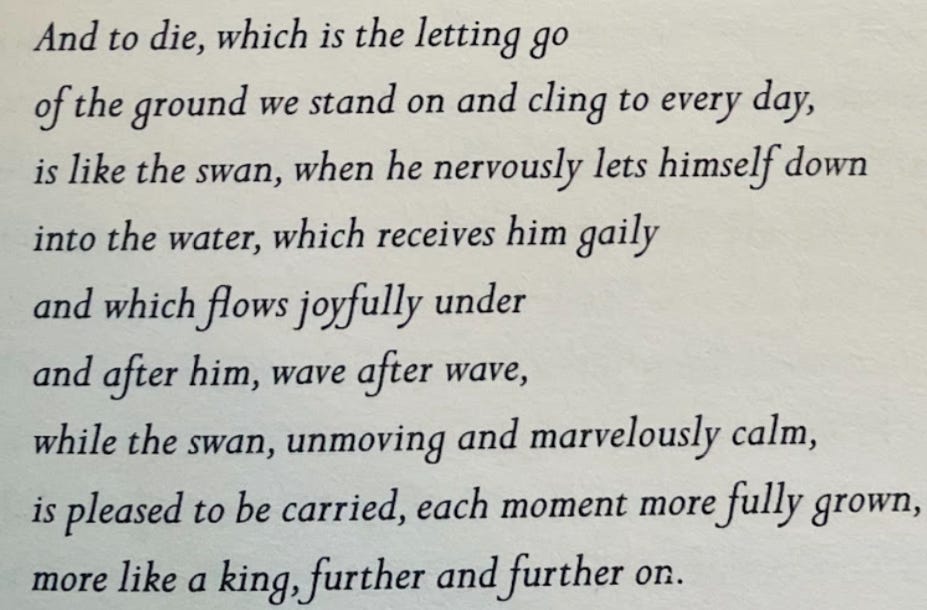
Then he tells Whyte,
“You are like Rilke’s Swan in his awkward waddling across the ground; the swan doesn’t cure his awkwardness by beating himself on the back, by moving faster, or by trying to organize himself better. He does it by moving toward the elemental water, where he belongs. It is the simple contact with the water that gives him grace and presence. You only have to touch the elemental waters in your own life, and it will transform everything.”
This is exactly what my life has felt like these past these years—swimming at times, stumbling at others, but mostly a whole lot waddling. These past months, though, as I’ve been a co-leader for a retreat in Sicily, led and hosted my own here in England, and immersed myself in training to become a Quantum Energy Coach, I’ve felt myself landing in the water at last.
I’m fully here now, and my whole heart is in it, and I feel so much less resistance, so much more ease and energy, than I ever felt all those years trying to prove myself as a professor and scholar.
I thought that striving, unease, and exhaustion were simply what it meant to be an adult. But living like that, only half-heartedly, only half there, almost killed me.
I hope that you have found your elemental water, your wholeheartedness, in at least some part of your life. Do you feel you are only half there sometimes? Or all you all in? And do you notice a difference in your energy levels—and general well-being, when you’re fully there?
I’d love to hear your thoughts, as always!
Until next time,
Anne
P.S. Did you enjoy this post? If so, please click on the heart at the bottom or the top of this email/post. It helps me know what kinds of post you value and helps others discover what we’re up to here.
And if you do value these newsletters, you can help me continue this work and gain paid subscriber benefits as well! Check them out by clicking below.
It's wonderful that you have reached this place of wholeheartedness.
Thanks for this, too:
"the swan doesn’t cure his awkwardness by beating himself on the back, by moving faster, or by trying to organize himself better. He does it by moving toward the elemental water, where he belongs."
“You only have to touch the elemental waters in your own life, and it will transform everything.”
I think I’m finally experiencing the truth of this, through the literalness of living by the sea again after 30+ years, but also by running a writers group and being here on Substack, where I get to do and be with others doing the one thing I’ve done my whole life - writing!
I also used to teach, and that classroom was my element, too, so long as I could keep it separate from the systems that sought to steal its vitality.
A really thought-provoking piece - I loved it!